

 CART
CART
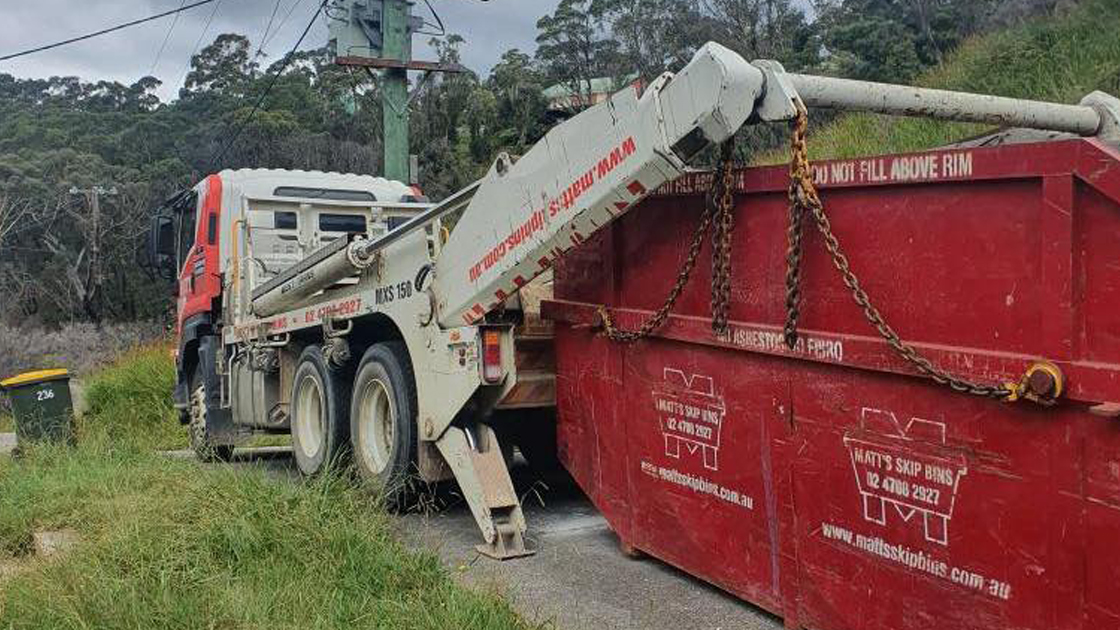
No two properties are ever quite the same, and after years of dropping off and picking up skip bins across Western Sydney, our drivers have seen just about everything. Overhanging trees, driveways on an angle, muddy paddocks, gates barely wider than the truck itself. It all comes with the territory.
Rather than a single tricky job, we wanted to pull together some of the standout deliveries our team has handled over the years. It’s a good reminder of what our drivers deal with daily, and why a bit of experience goes a long way in getting your bin exactly where you need it.
Overgrown and bushy properties
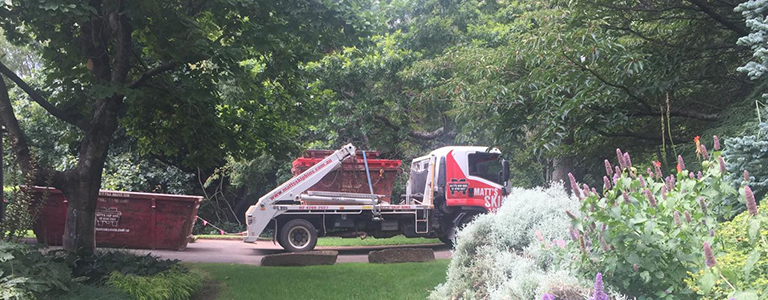
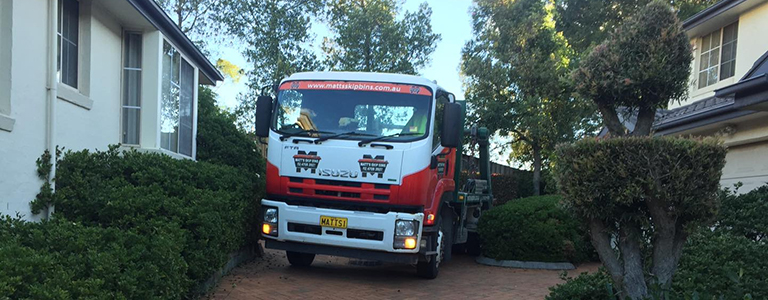
Western Sydney has no shortage of leafy, established properties, and greenery is one of the most common hurdles our drivers face. Overhanging branches can interfere with the arms of the truck as we lower a bin into place, and thick hedging along a driveway can act almost like a wall.
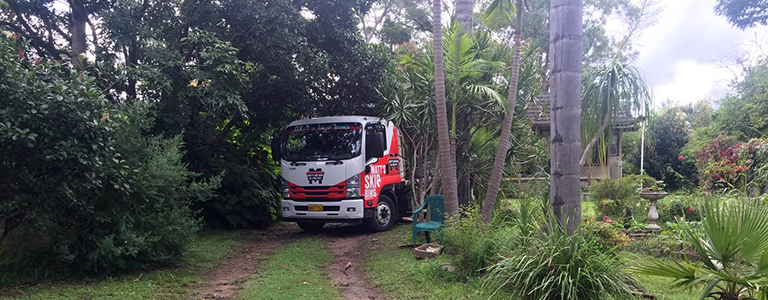
At one property, our driver had to duck the truck past low branches before extending the skip loader arms into a clear patch beyond the tree. On another job, a customer’s driveway was completely closed in by dense trees, and our team worked with the homeowner, chainsaw in hand, to clear just enough of a path to get through. We’ve also had jobs where a bin needed to sit directly beside a low-hanging tree, requiring us to carefully hold back the branches while lowering the bin in stages.
Thick, established gardens rarely stop us. They just mean our drivers need to look up as much as they look ahead.
Steep and sloped driveways
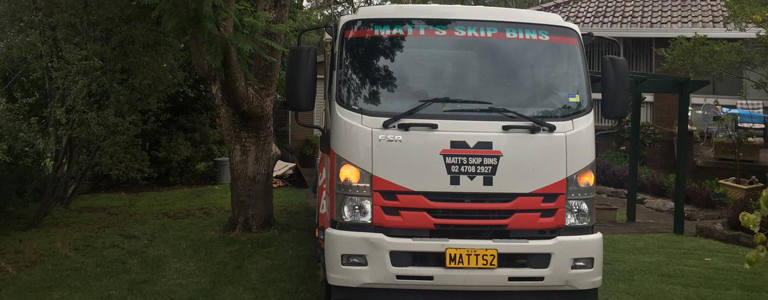
Sloped driveways come with their own set of problems, from levelling the truck safely to finding solid ground for the bin to sit on without shifting. This is especially common in areas like the Blue Mountains and the Hills District, where hilly blocks are the norm, not the exception.
We’ve delivered to driveways so steep from the street that you’d never guess the truck would end up scraping close to the road on the way down. In one case, our driver used bricks to level out the skip bin loader on a deceivingly sloped block, solving the problem with a bit of quick thinking rather than turning the job away. Reversing back up a steep, narrow driveway to collect a full bin brings the same challenge in reverse, and it’s just as common.
Whether it’s a gentle incline or a proper hill, our drivers know how to read a slope before committing the truck to it.
Off-road, dirt and rough terrain
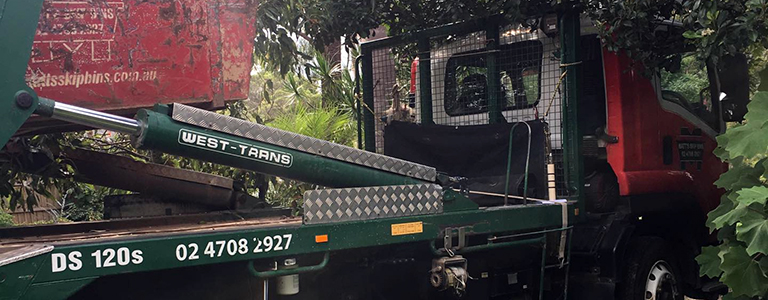
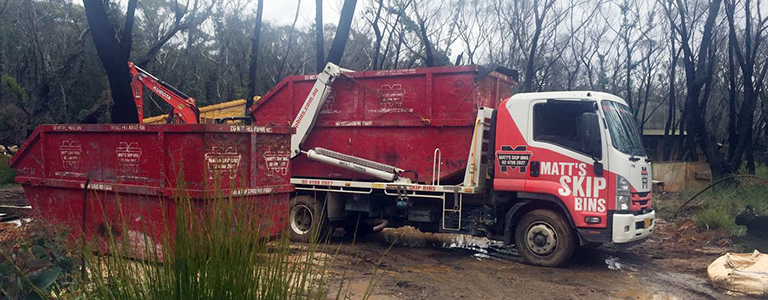
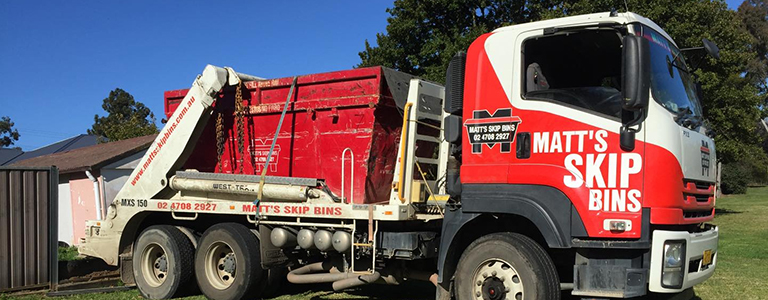
Acreage properties around the Hawkesbury and rural pockets of Western Sydney often mean plenty of space to work with, but getting there is a different story. Long, unsealed driveways, loose gravel and rutted dirt tracks all test the truck before the bin even comes into play.
After heavy rain, one delivery point was surrounded by muddy puddles that easily could have bogged a less capable vehicle. We’ve also taken skips down private dirt driveways and rocky, sloped tracks that wind well past where a standard vehicle would turn back, delivering the bin right where the customer needed it at the end.
If your property is only reachable by a gravel road or a paddock track, that’s a normal Tuesday for our team.
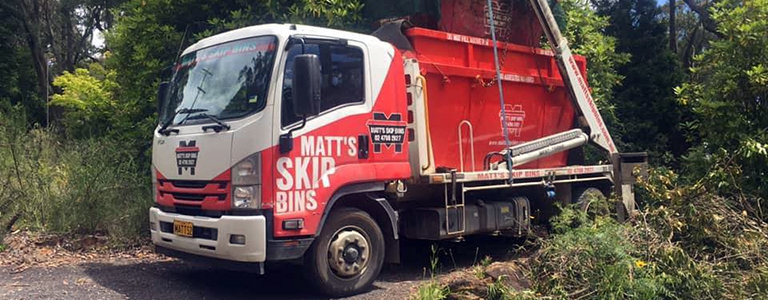
Sloped driveways
Have you ever tried to make a heavy delivery on a sloped property? Let us tell you – it is not a simple task! With sloped driveways come many considerations. The challenges that come with it can range from levelling the truck to finding a stable spot for the skip bin to stay. Properties with sloped driveways can be a deceiving situation that takes skill and patience.
Often seen when delivering skip bins to customers in the Blue Mountains, sloped driveways are not uncommon in our trade. Check out this delivery from the start of the year in January. Not only was it a tight driveway, but it also had a steep slope. Of course, we still got the job done!
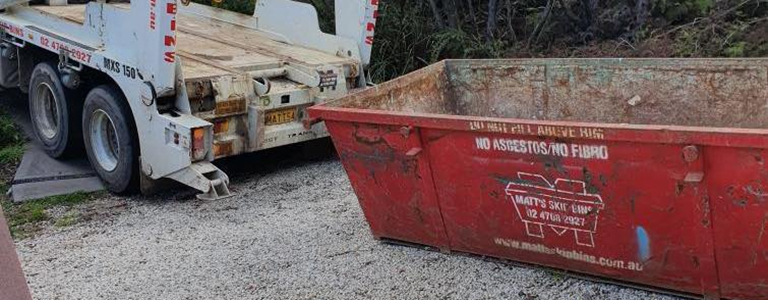
Narrow gates, tight driveways and awkward angles
Tight access is probably the single most common challenge our drivers face, and it takes plenty of forms. Sometimes it’s a gate wedged between a hedge and a fence with barely a hand’s width of clearance either side. Sometimes it’s a driveway squeezed between a brick wall and a brick fence with zero room to correct course. And sometimes it’s not the width that’s the issue at all, but the angle, a sharply positioned bin spot at the end of a shared driveway, or a delivery point wedged between a garden bed and a shipping container.
We’ve backed trucks down skinny laneways in older established suburbs, threaded them between neighbouring properties in duplexes, and inched through narrow side streets with only inches to spare from the trees lining either side. In every case, it comes down to the same thing: careful, patient manoeuvring, and a driver who knows exactly how much room the truck actually needs.
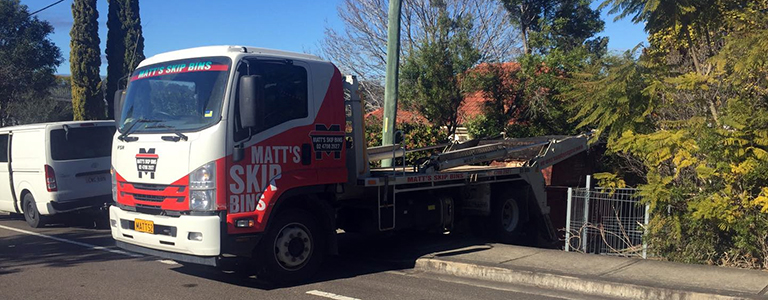
Working around fences, powerlines and other fixed obstacles
Not every obstacle can be driven around. Sometimes a fence panel is genuinely in the way of the requested bin spot, and the most practical solution is to remove it temporarily and reinstate it once the bin is in place. We’ve also worked around decorative archways and gate features too low for the truck to clear, finding a second entry point rather than risking any damage to the customer’s property.
Overhead power lines add another layer of caution entirely. Low-hanging lines mean our drivers have to check clearance from every angle before extending the skip loader, and in a few cases, lines have needed to be safely held clear before the truck could get close enough to complete the job. It’s a reminder that a “quick drop-off” often depends on a driver who’s paying attention to what’s above the truck, not just what’s in front of it.
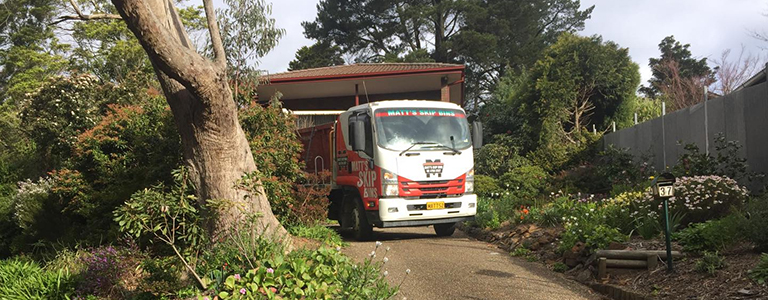
Tight communal properties: units, townhouses and duplexes
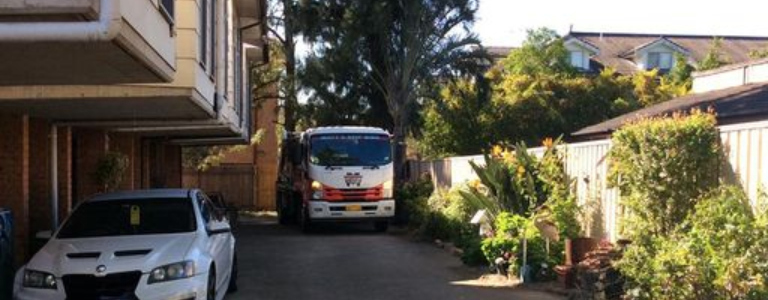
Multi-dwelling properties bring a different kind of challenge again. Shared driveways, close neighbours and limited common areas all shrink the margin for error. We’ve delivered to units where the bin had to be squeezed between letterboxes, a light post and a tree, and to townhouses at the rear of a complex where the only way in was a long, winding, narrow driveway shared with several other homes.
In one particularly tight unit complex job, there was barely a few millimetres of clearance between a concrete block wall and scaffolding, and the bin still went in exactly where it was needed to. These jobs rely heavily on planning the approach before committing the truck, since there’s often no room to simply back out and try again.
Obstructed access: parked cars, moved bins and piled-up items
Sometimes the biggest obstacle isn’t the property itself; it’s what’s sitting in front of the bin on pickup day. We’ve turned up to jobs where parked cars boxed in a skip in a communal car park, requiring a quick call to the owners to move vehicles before the job could continue. We’ve also found bins relocated by customers to spots we couldn’t safely access with the truck, tucked under a pergola or pushed against a structure, meaning the bin had to be dragged clear by hand before it could be loaded.
Piled-up items stacked right next to a bin cause a similar problem: less room to manoeuvre, but rarely a reason to walk away from the job.
No driveway too tricky, no delivery too tight
From overgrown blocks and steep hills to unit complexes and dirt tracks, our drivers bring the same mix of patience, planning and hands-on problem-solving to every delivery. If your property has an awkward driveway, a tight gate, or an access point you’re not sure a skip bin truck can handle, we’ve likely already tackled something similar.
Get in touch with our team or book your skip bin online and let us worry about how it gets there.

